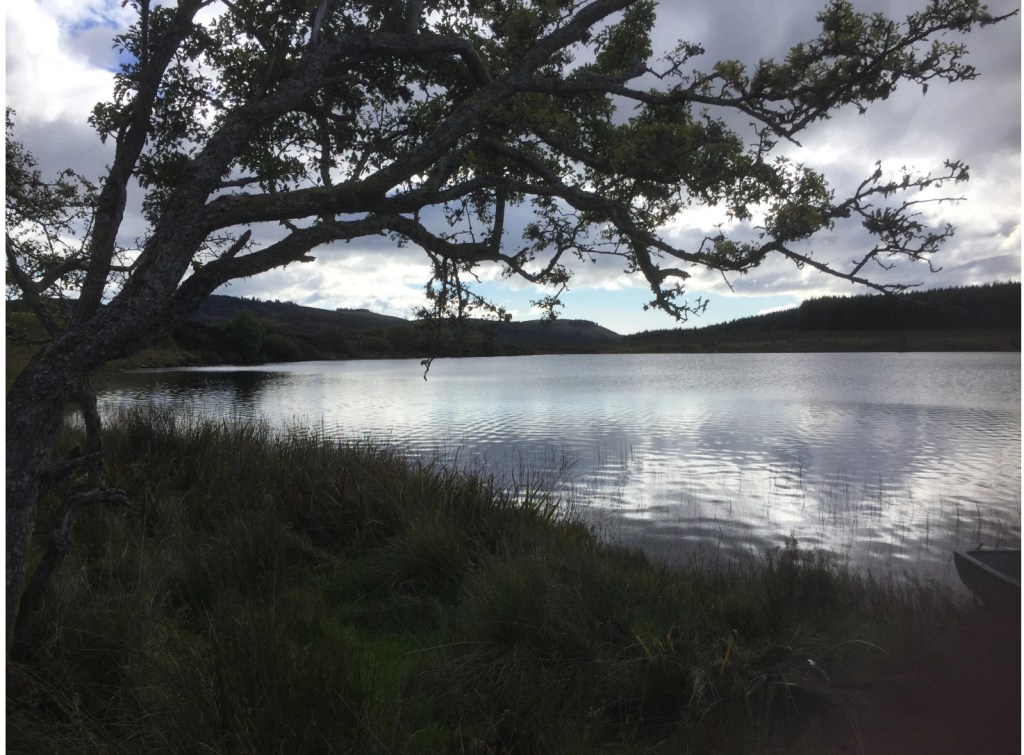
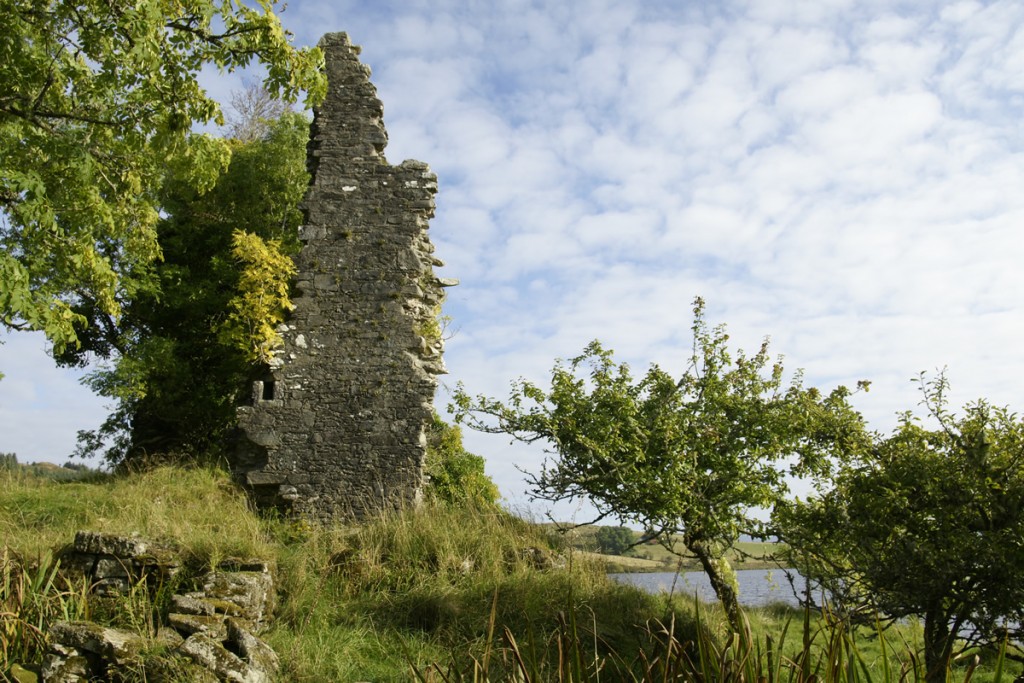
Today, on a bright early summer afternoon Loch Asgog exudes peace and tranquillity. Above, the expansive blue-sky frames two buzzards, soaring gracefully. A warm gentle breeze from the southwest corner rustles the reeds softly. The occasional bleating of this year’s lambs from the meadow above the north shore and the hum of bees from the whin bushes yellow flowers are the only sounds today. The sweet coconut scent is blown towards my boat a short cast or so from the land. Small trout are rising along the margins but to entice a bigger fish in the heat and direct sunlight would require much effort and more than a little luck. Instead, I lounge back in the boat, shield my eyes and enjoy the choreography of the buzzards overhead secure in the knowledge that in the evening I will have a much better chance of encountering one of Asgog’s dark and ancient trout. My senses are seduced with the natural elements, and I feel a desire to close my eyes and drift off for a nap. Instinctively I scan the surroundings and my gaze rests on the ruined structure on the west shore of the Loch. As quick as a sudden take from the depths, my mind fills with the shocking events from the bloody and brutal history of what was once a castle belonging to the Lamont clan….
I had long fancied an overnight at Loch Asgog to maximise evening and early morning trout sessions. Packing my lightweight tent, rods and tackle into the car on a late May afternoon I was both excited about the potential and a little apprehensive about the midgies! I also had a slight foreboding regarding the haunting nature of the history of the place.
For this was the site of a violent episode in the Clan feud between Lamont and Campbell. In 1640 Asgog Castle together with nearby Toward were Lamont strongholds. Decades of rivalry, fuelled by differences in allegiances towards Scotland’s rule, and local land disputes came to a bloody head in 1646, when the Campbell’s laid siege to first Toward and then Asgog Castles. Overwhelmed and trapped in both strongholds the Lamont’s were promised their lives and freedom by Campbell, who then betrayed their written word to massacre several hundred of their rivals. Looking at the ruined castle on Loch Asgog it is at first hard to imagine the bloody and vicious chaos of 1646. The screams and human horror of the time are at stark odds with today’s tranquility. This beautiful and ancient place however had played witness to tribal conflicts even earlier…
Starting just after dawn, I had earlier drifted the west shore on a south westerly breeze. A sink tip fished my team of blue Zulu, Kate McLaren and Black Pennel, subsurface to good effect along the reed beds. A brace of ¾ pounders to the boat in the first hour, as well as numerous missed thumps, shook my early morning lethargy. The second hour drifting towards the ‘Alltan nam breac’ burn (trout stream) that enters the Loch at its northwest corner, produced 3 slightly smaller, but hard fighting trout. A missed offer from a seemingly larger fish, left me keen for more but as the sun rose and the breeze dropped the window of opportunity faded. I headed in for some breakfast and a rest in my tent. I dose off thinking about how this ancient place once was….
The discovery of Crannogs on Loch Asgog suggests safety and security were sought from the Loch thousands of years earlier as primitive people made their home in fortified island dwellings. These fortified homes were easier to defend from roaming predators and surrounding tribes and again evoke the visceral nature of our ancestor’s struggle for survival.
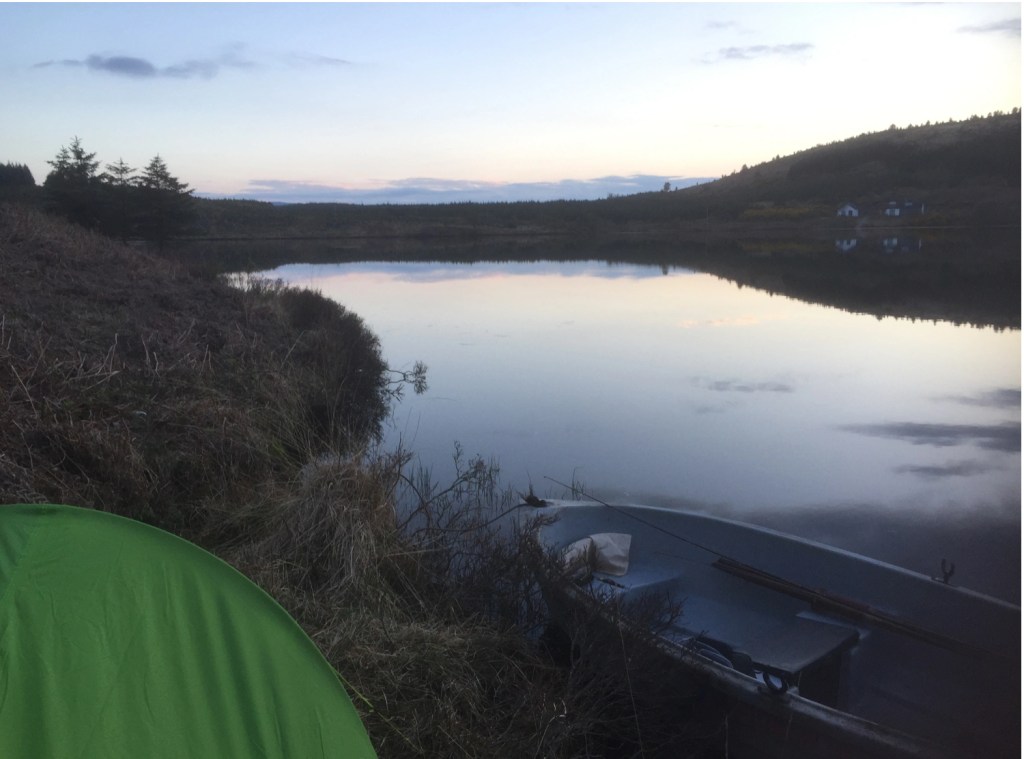
The breeze came and went throughout the day. The tent retained a temperature conducive to sleeping on top of my sleeping bag. The promise of swarming midgies remained as I ate and prepared to fish again. I decided on a floating line and started with hoppers and spiders. Electing to camp on the opposite bank from the castle ruin, I silently crossed the loch with the electric outboard to where the breeze was most obvious. I started my drift below the remains of the castle keep. Trout were beginning to rise here and there as I cast parallel to the shore along the weed bed. Two retrieves in a lively fish thumped me – fish on! I struggled to keep the fish from diving directly back to the cover of the weeds and managed to avoid the worst of it. The fish next made for the depths, allowing me to compose myself and locate the net. Soon after I landed what was to be my best fish of the trip- a trout of around the pound mark that had taken my orange bodied hopper. I enjoyed a productive evening with several further smaller but lively fish, including a nice fish on a claret Klinkhammer. The midgies made their appearance as the wind disappeared and fishing alone, I decided to come ashore before complete darkness. Over a cup of tea and supper I reflected on my trip. Overall, I had around a dozen fish across the two sessions. Tired and satisfied I drifted to sleep trying not to dwell on the fate of the Lamonts!
Next morning was damp and I walked the stiffness from my legs by exploring the remains of the man-made dam on the northwest shore. Here was another aspect of human conflict embedded in this natural beauty spot.
In the first half of the 1800’s the Loch was dammed to increase its capacity and provide a regulated flow of water to power mill wheels for the production of gunpowder. This continued for almost another century, a period coinciding with much of Britain’s global exploitation and colonial expansion. That one of the most important commodities for facilitating this was produced using the natural resources from the tranquility of Loch Asgog is another anomaly
The Loch holds a healthy head of wild but often elusive brown trout. Strong fighting well marked and often lean fish, who themselves seem to have a martial quality, appropriate almost, given the history. They often make a largely unannounced appearance, aggressively attacking a range of standard wets, nymphs and dries. Early mornings and evening sessions being generally most productive
Asgog is a Loch that for all of its peacefulness and beauty, has sleeping warriors and demons just under its surface, for those willing or daring to look!
Permits to fish Loch Asgog are available from Kyle’s of Bute Angling Club at several local outlets in the Kames area. The Loch remains part of the Barony of Inneryne and the current Baron is Baron Ronald Busch Reisinger, who is Honorary President of Kyles of Bute Angling Club.
More information at kylesofbuteanglingclub.wordpress.com
 Argyll Trout Fisher