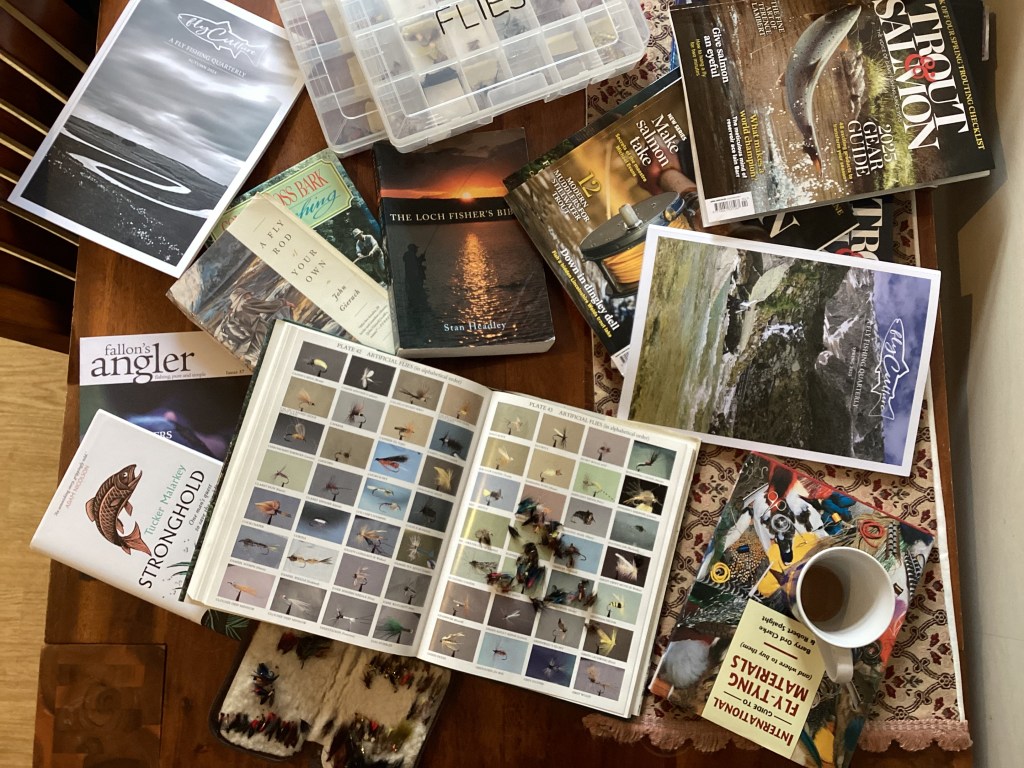
Every year it seems to be the same. I spend the first half of March with the best of intentions that this year I am going to take a mature and considered approach to my fly fishing. I attempt to brush up on my entomology as the logical first step. I try to memorise and practice a few Latin names and classifications. (I am sure that Gierach questioned the logic of striving to be able to identify staples in a trout’s diet in a dead language!) I start tying. I read up on patterns, their purpose and how deadly they are. I try to tie some new patterns and stock up on my usual go to flies. I clear boxes of the ones that were very substandard but were good enough last season. My tying is improving, but it’s an ongoing battle against age and my deteriorating eyesight. My early season outings are often concentrated on one of the local waters that actually has quite an abundant fly life and this fuels the early season passion that this season the code will be cracked. I will look back and chuckle at all the times I fished the wrong patterns in the wrong waters as I apply my new science and logic. I will join the ranks of the serious guys and understand all the technical how to articles in certain magazines that I have previously skipped by. I will know stuff that sounds impressive like all those experts. With my new understanding and sharp observations, I will shortly be the new Guido Rahr….
Or maybe not! By April’s end my approach starts to waver a little. I start to ensure some old favourites are plentiful and to hand. Kate McLaren, Pennel, Zulu, Bumbles, Bibio Eventually Greenwell’s Glories and Black Gnats are all that remain of my annual resolution to more fully understand the natural world.
By summer attentions turn slowly toward migratory species where success is less dependent on replicating nature and more about triggering instincts.
Now I am not in a position to make any precise or scientific comment perhaps, but for environmental reasons it does seem that fly life is not as abundant or predictable as previously. Weather patterns continue to blur the seasons here in west Scotland, significantly more than I can remember. In recent times our Club’s June moth competition has been wet, windy and cold more often than not for example. I suspect that climate change and environmental damage is changing aspects of entomology that in turn is changing how we fish successfully for trout in wild settings. The old debates about what constitutes fly fishing could be revisited here but that could be opening a whole new can of worms!!
In reality most of us probably know what we need to know about the type of fishing we prefer or that is available to us. The skill set needed is developed and honed. Perhaps the notion of all round expertise in fly fishing is a rare and largely unattainable concept. As our environment changes and new aspects to the discipline emerge perhaps the idea of a fly-fishing guru becomes more vague, more mystical. Fly fishing will always be many different things to many different people. How to articles and expert panels may fuel our desire to join the elite and yet the true significance and value of fly fishing is as faraway from human competitiveness as chalk is from cheese. Fly fishing becomes diminished and banal if it is reduced to simply maximising catches through technical knowledge and ability, when it is capable of giving its disciples so, so much more.
Perhaps returning to the humility and wisdom of the late John Gierach is where to find a way to separate the chaff from the wheat? As the great man once stated, ‘Something to think about: If you fish the wrong fly long and hard enough, it will sooner or later become the right fly.’
 Argyll Trout Fisher